
What Is a ZnSe Prism and Why Is It Used in Infrared Optical Systems?
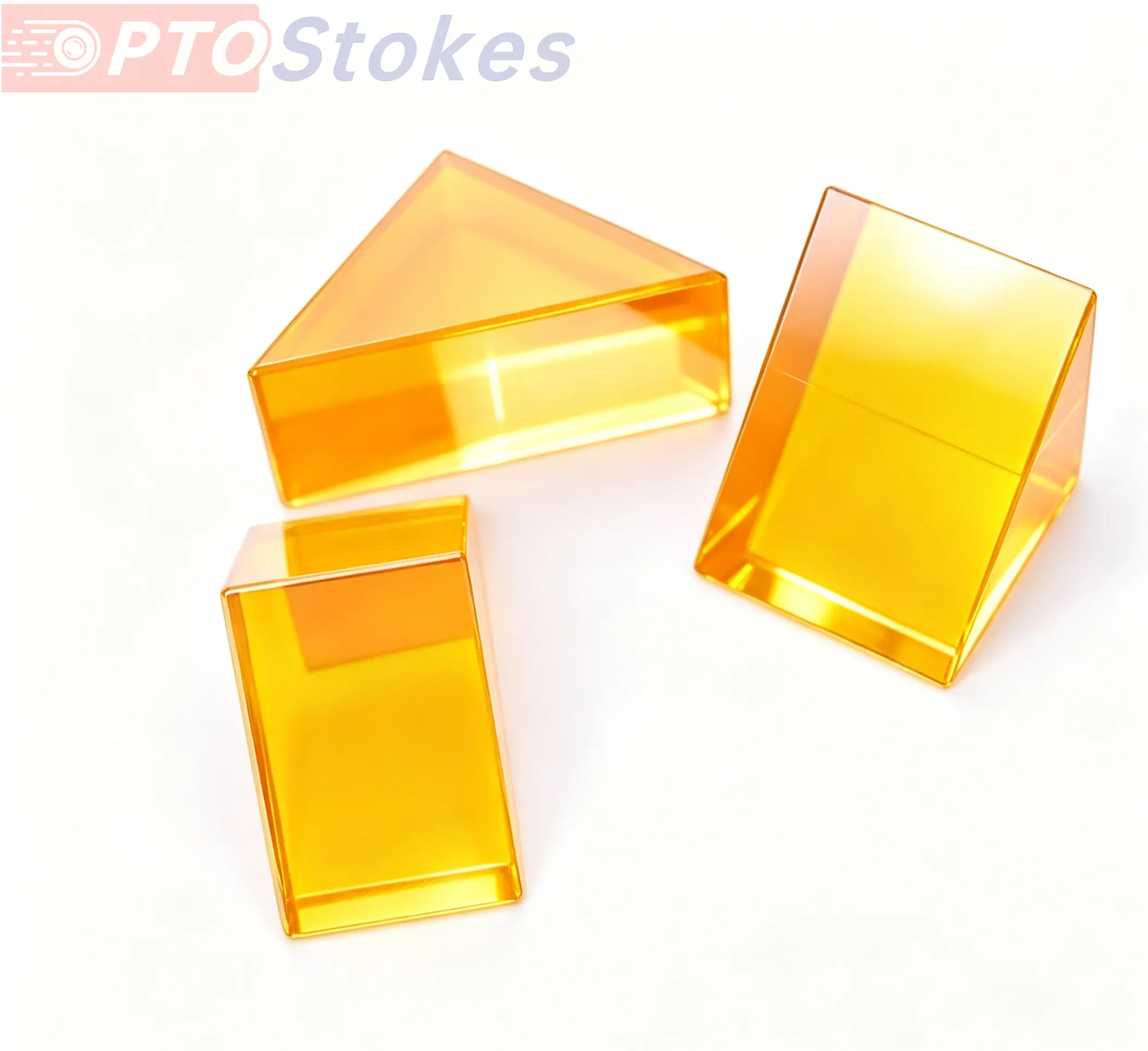
A ZnSe prism (Zinc Selenide prism) is a high-performance infrared optical component designed to control, redirect, separate, or combine infrared light through precise refraction and reflection. Due to its excellent infrared transmission characteristics, ZnSe prisms are widely used in thermal imaging systems, infrared spectroscopy, laser systems, remote sensing equipment, and advanced infrared measurement instruments.
Unlike visible optical components, infrared optics must overcome challenges caused by material absorption, internal defects, and wavelength-dependent transmission losses. The optical material, manufacturing process, and surface quality of an infrared prism directly influence system performance, including signal integrity, imaging clarity, and beam positioning accuracy.
Among infrared optical materials, Zinc Selenide (ZnSe) is one of the most commonly selected materials for mid-wave and long-wave infrared applications. Its combination of broad infrared transmission, excellent optical uniformity, and good manufacturability makes it a preferred choice for demanding infrared optical assemblies.
Key Material Selection Principles for Infrared Optical Prisms
Selecting the right material for an infrared prism requires a comprehensive evaluation of optical performance, mechanical stability, environmental durability, and manufacturing feasibility. For engineers and purchasing professionals, the following four factors are critical when evaluating ZnSe and other infrared optical materials.
1. High Infrared Transmission Performance
Transmission efficiency is the primary consideration when selecting infrared optical materials. The prism substrate must provide high transmission and low absorption within the target wavelength range to minimize optical energy loss.
| Infrared Region | Typical Wavelength Range | Material Requirement |
| Near Infrared (NIR) | 0.76–2.5 μm | Low absorption and low scattering characteristics |
| Mid-Wave Infrared (MWIR) | 2.5–5 μm | High transmission with minimal material absorption |
| Long-Wave Infrared (LWIR) | 8–14 μm | Stable transmission for thermal imaging applications |
ZnSe is widely used in infrared optical systems because it provides excellent transmission from approximately 0.5 μm to 22 μm, covering many MWIR and LWIR applications. When combined with appropriate anti-reflection coatings, ZnSe prisms can achieve improved transmission efficiency and reduced surface reflection losses.
2. Optical Uniformity and Material Purity
Infrared systems are highly sensitive to material imperfections. Internal defects such as bubbles, inclusions, cracks, and refractive index variations can introduce scattering, distortion, and wavefront errors that reduce overall system performance.
High-quality ZnSe optical components are commonly manufactured using Chemical Vapor Deposition (CVD) technology. CVD ZnSe offers excellent density, optical homogeneity, and consistent refractive index characteristics, making it suitable for precision infrared applications requiring stable optical performance.
| Critical Factor | Impact on Optical Performance |
| Material purity | Reduces absorption and scattering losses |
| Internal uniformity | Improves imaging accuracy and beam quality |
| Low defect concentration | Enhances reliability in demanding applications |
3. Thermal and Chemical Stability
Infrared optical prisms are often deployed in challenging environments, including industrial inspection systems, outdoor thermal imaging equipment, and laser processing applications. Therefore, the substrate must maintain stable optical performance under temperature variations and environmental exposure.
ZnSe provides good thermal stability with a relatively low thermal expansion coefficient and suitable thermal conductivity. It maintains reliable dimensional stability within normal operating temperature ranges and performs well in many industrial infrared environments.
ZnSe is chemically stable under normal conditions and provides good resistance to moisture and mild chemical exposure. However, with a Mohs hardness of approximately 2.5, ZnSe is softer than many visible optical materials. Proper handling, polishing, and assembly processes are required to prevent surface damage.
4. Manufacturability and Cost Considerations
The ideal infrared optical material must balance optical performance with manufacturing feasibility. Materials that are difficult to polish, process, or coat may increase production complexity and overall system cost.
ZnSe offers excellent machinability for precision grinding, polishing, and optical coating processes. Although its material cost is higher than standard infrared glass, its superior infrared transmission and performance advantages make it a practical solution for industrial inspection, medical imaging, security systems, and laser applications.
Why Choose CVD ZnSe Prisms for Infrared Applications?
CVD ZnSe prisms provide a reliable combination of infrared transmission capability, optical consistency, and processing flexibility. They are widely selected for applications where optical stability and precise beam control are essential.
| Application | Typical Requirement |
| Thermal Imaging | High transmission in LWIR wavelength bands |
| CO₂ Laser Systems | Low absorption and high-power infrared durability |
| Infrared Spectroscopy | Stable optical transmission and chemical resistance |
| Remote Sensing | Precision beam control and environmental reliability |
Custom ZnSe Prism Solutions from iroptical
Choosing the correct infrared prism involves more than selecting a suitable material. Optical engineers must also consider wavelength requirements, dimensional tolerances, coating specifications, environmental conditions, and production consistency.
iroptical provides CVD ZnSe optical components, infrared windows, prisms, and beam control optics for thermal imaging and laser applications. With extensive in-stock options and customized manufacturing capabilities, iroptical supports both prototype development and volume production requirements.
For projects requiring specific optical specifications, coating requirements, or application guidance, contact iroptical technical specialists for professional support, sample evaluation, and quotation assistance.
Email: sales@iroptical.com