
What Key Technical Properties Make Zinc Selenide (ZnSe) Suitable for Infrared Systems?
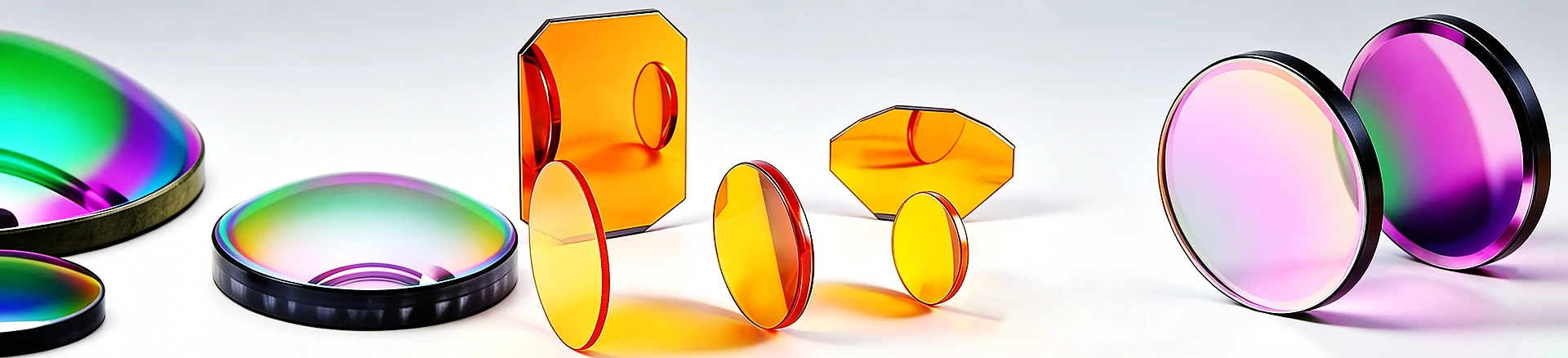
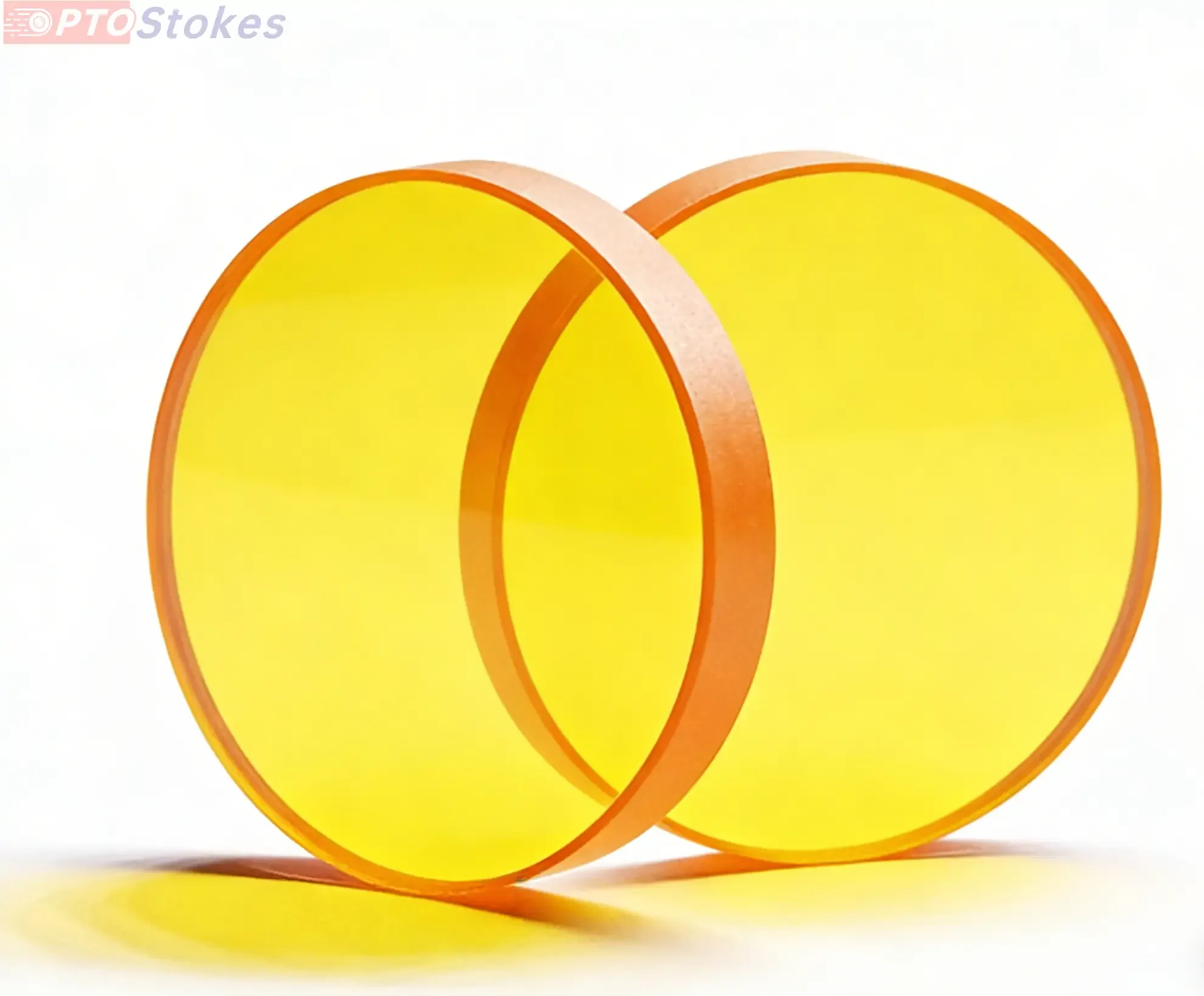
Zinc Selenide (ZnSe), synthesized via advanced Chemical Vapor Deposition (CVD), stands as a premier II-VI wide-bandgap semiconductor optical material. Characterized by its exceptionally broad transmission spectrum spanning from 0.5 μm to 15 μm, ultra-low thermal absorption, high thermal conductivity, and superior environmental stability, ZnSe serves as the foundational substrate for modern mid-to-far infrared (IR) optoelectronics, high-power industrial laser systems, and precision analytical instruments. Unlike conventional optical crystals, high-purity CVD ZnSe balances excellent multi-spectral transmittance with high thermal shock resistance, allowing it to maintain mechanical integrity and optical precision under the most demanding industrial, defense, and medical operating conditions.
Primary Industrial & Technical Application Scenarios
1. High-Power Industrial CO₂ Laser Systems
Industrial laser processing represents a primary market demand for high-performance optical elements. Operating at the 10.6 μm wavelength, continuous-wave (CW) and pulsed CO₂ laser systems rely heavily on ZnSe to fabricate focusing lenses, beam expanders, and output couplers for sheet metal cutting, precision engraving, and heavy industrial welding. To withstand severe continuous thermal load exceeding 4000W without suffering from thermal lensing or catastrophic optical damage (COD), the deployed CVD ZnSe lenses must meet uncompromising material specifications:
Ultra-Low Bulk Absorption: The internal bulk absorption coefficient must be strictly limited to ≤ 0.0005 cm⁻¹ at 10.6 μm to mitigate internal heat buildup and prevent focal drift.
High Laser Damage Threshold (LDT): Both the core ZnSe substrate and its specialized anti-reflective (AR) thin-film coatings must endure high peak power densities.
Strict Material Homogeneity: The crystalline structure must be free from micro-inclusions, void defects, or localized refractive index variations to eliminate beam distortion and unwanted scattering.
2. Infrared Detection and Thermal Imaging Optics
In defense optoelectronics, environmental security, and modern autonomous driving systems, ZnSe functions as a critical component for long-wave infrared (LWIR) and mid-wave infrared (MWIR) spectra. It is frequently engineered into ruggedized IR windows and target-tracking assemblies to guarantee all-weather optical performance through dense smoke, atmospheric haze, or zero-lux environments. The technical baseline for thermal detection scenarios includes:
| Performance Indicator | Engineering and Technical Requirement |
|---|---|
| Spectral Consistency | Maintains high, uniform transmission across the 3–5 μm and 8–12 μm bands without internal molecular absorption peaks. |
| Environmental Resilience | Utilizes hydrophobic, hard carbon or specialized durable coatings to resist humidity, salt spray, and extreme thermal cycling in outdoor deployments. |
3. Medical Laser Therapeutics and Micro-Surgery
Within clinical environments, ZnSe elements are tightly integrated into advanced laser therapeutics—such as dermatology treatments and precise carbon dioxide laser micro-surgeries—as well as non-invasive diagnostics. While bulk ZnSe exhibits high chemical inertness under normal operating conditions, it is treated as a regulated substance due to toxicity risks associated with zinc and selenium dust if the material undergoes physical degradation or overheating. Consequently, medical OEMs mandate pristine surface metrics alongside isolated structural integration:
Superior Surface Quality: Demands strict scratch-dig specifications of 20-10 or better to guarantee zero micro-deflection of the therapeutic laser beam during delicate surgical procedures.
Hermetic Sealing Design: The optical cell housing must support airtight mechanical mounting to isolate the ZnSe element from direct biological contact and fluids, complying fully with medical sterilization protocols.
4. Environmental Spectroscopy and FTIR Analysis
For greenhouse gas monitoring, industrial exhaust testing, and chemical process control, ZnSe optics are highly utilized within Fourier Transform Infrared (FTIR) spectrometers to accurately identify chemical traces such as CO₂, SO₂, and volatile organic compounds (VOCs). In these setups, precision beam control optics made of ZnSe provide stable transmission across a vast spectral range. This application sector prioritizes long-term index stability, zero parameter drift over thousands of operational hours, and robust resistance to low-concentration acid corrosion commonly encountered in industrial stack emissions.
Streamlined Sourcing and Custom ZnSe Manufacturing
Navigating the complex trade-offs of optical system design requires a manufacturing partner capable of translating raw technical specifications into repeatable product performance. Engineering and procurement teams often struggle with long lead times for custom components, rigid minimum order quantities, and unpredictable batch-to-batch quality from suppliers that lack complete control over their production lines.
As a global supplier specializing in high-precision infrared components, iroptical addresses these supply chain bottlenecks directly. We maintain an extensive, cataloged inventory of standard imperial and metric ZnSe optical blanks, windows, and focusing lenses ready for immediate off-the-shelf dispatch, effectively eliminating development delays for urgent R&D prototyping. For specialized optical configurations, our robust production facilities support high-level custom shaping, strict geometric tolerancing, and application-specific thin-film coating designs—including broadband anti-reflective (BBAR) coatings optimized for the 8–12 μm range.
Every component shipped from our factory undergoes rigorous spectrophotometric and surface interferometry testing to guarantee world-class quality, predictable lead times, and reliable performance in the field. To submit a drawing review, request an RFQ, or consult with our applications engineering team regarding your specific substrate requirements, please contact our global sales office directly at sales@iroptical.com.