
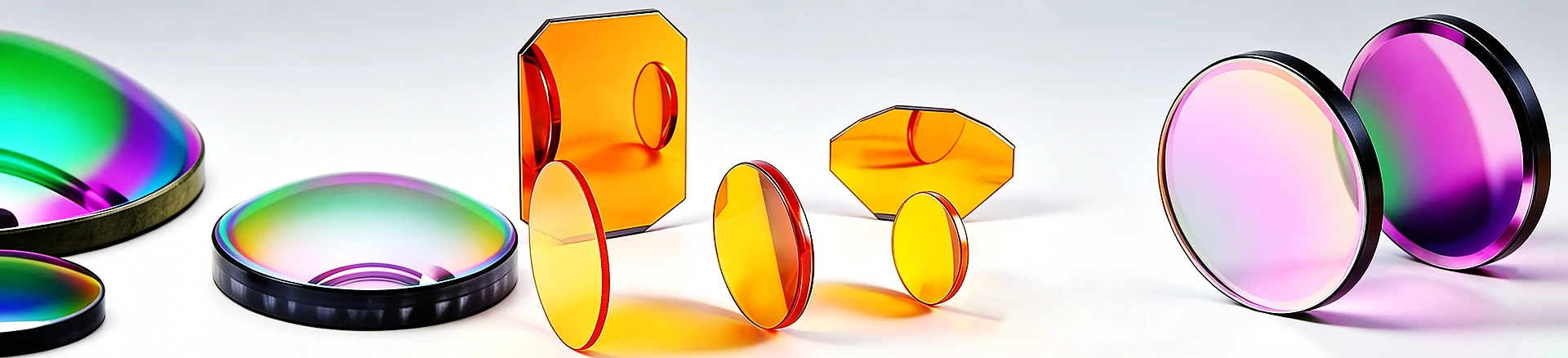
Understanding the Technical Advantages of ZnSe Meniscus Lenses
In high-precision infrared (IR) optical systems, such as CO₂ laser processing, thermal imaging, and spectroscopy, the geometric design of a lens dictates the system's focus spot size, imaging resolution, and overall power efficiency. While product developers and purchasing managers often opt for plano-convex lenses due to lower upfront procurement costs, specialized infrared applications demand superior wavefront integrity. Zinc Selenide (ZnSe) meniscus lenses offer irreplaceable optical and physical performance benefits over standard configurations under rigorous working conditions.
As a leading supplier of precision infrared components, iroptical manufactures world-class CVD ZnSe lenses, IR windows, and beam control optics. Decades of volume production experience confirm that understanding the optical dynamics of the meniscus shape is essential for balancing system pricing with enterprise-level performance metrics.
The Physics of Spherical Aberration in High-Refractive-Index IR Systems
Spherical aberration remains a primary bottleneck limiting the resolution and spot energy density of infrared equipment. Due to the inherent geometry of traditional spherical surfaces, parallel incoming rays striking the outer zones of a lens do not intersect at the identical focal point as paraxial rays. In the visible spectrum, engineers typically correct this by deploying multi-element doublet or triplet lens assemblies. However, because specialized substrate materials for the infrared band carry significantly higher baseline costs than standard optical glass, utilizing multi-lens configurations exponentially drives up system costs, assembly complexities, and insertion losses.
This is where ZnSe meniscus lenses resolve a critical engineering constraint. By pairing a convex surface with a concave surface of complementary curvature, a single meniscus lens achieves the minimal aberration condition. It eliminates the need for bulky correction elements, meeting the strict lightweight and high-precision requirements of premium IR hardware layout designs.
Why Substrate Refractive Index Matters
Visible-light optical glass generally exhibits a low refractive index ranging between 1.5 and 1.7, allowing a plano-convex shape to yield close to minimum spherical aberration. Conversely, infrared optics utilize heavy, high-index semiconductors like Germanium (Ge, n≈4.0) and Zinc Selenide (ZnSe, n≈2.4 at 10.6 µm). When standard plano-convex profiles are produced with high-index media, the dramatic refraction at the single curved boundary causes extreme ray bending, exacerbating wavefront distortion. The meniscus architecture balances the optical power across both the entrance and exit apertures, reducing the marginal deflection of the laser beam.
| Lens Substrate Material | Refractive Index (n) | Optimal Geometry for Minimal Aberration | Typical IR Application Wavebands |
|---|---|---|---|
| Optical Crown Glass | 1.52 | Plano-Convex / Bi-Convex | Visible to Near-Infrared (400 - 900 nm) |
| CVD Zinc Selenide (ZnSe) | 2.40 | Positive / Negative Meniscus | Mid-Wave to Long-Wave IR (0.5 - 14.0 µm) |
| Monocrystalline Germanium (Ge) | 4.00 | Strict Meniscus Profiling | Long-Wave Infrared (8.0 - 12.0 µm) |
Functional Diversification: Positive vs. Negative Meniscus Geometries
Depending on the downstream optical architecture, different meniscus variants are deployed to optimize system throughput:
Positive Meniscus Lenses
Featuring a greater radius of curvature on the convex surface than the concave side, these lenses exhibit positive focal length. They are primarily utilized to achieve tighter, diffraction-limited focal spots than their plano-convex equivalents. This makes them the industry standard for high-power industrial CO₂ laser cutting, precision marking, and focused medical laser devices.
Negative Meniscus Lenses
With an outer radius of curvature smaller than the inner radius, these components act as beam-diverging optics. They serve to extend system focal lengths, modify numerical apertures (NA), and correct residual field curvature within complex multi-spectral thermal imaging systems and forward-looking infrared (FLIR) cameras.
Industrial-Grade Supply Chain Capabilities by iroptical
Optimizing system performance requires high-purity materials and rigorous dimensional execution. iroptical provides an extensive in-stock inventory of standard imperial and metric ZnSe meniscus lenses alongside robust custom manufacturing capabilities to match your specific engineering layouts. Our advanced physical vapor deposition lines support both uncoated options and high-efficiency 8–12 µm Broadband Antireflection (BBAR) coatings, driving surface transmission rates past 99% per surface at critical operating frequencies.
Whether you are building initial technical prototypes or scaling industrial manufacturing output, our mature production lines provide predictable lead times, international-class technology, and comprehensive batch-to-batch quality guarantees. Contact our engineering team at sales@iroptical.com or submit an RFQ form directly via our platform today to secure optical engineering consultations, sample evaluations, and volume tier pricing quotes.