
Magnesium Fluoride Optics: How to Select Windows & Thin‑Film Coatings for Your Application?
Magnesium fluoride (MgF₂) is a crystalline inorganic optical material valued for its broadband transmission, low refractive index, and high environmental stability. It is widely used in both bulk optical components and thin-film coating layers for ultraviolet (UV), visible, and infrared (IR) systems.
As one of the lowest-index common optical materials, MgF₂ plays a key role in anti-reflection (AR) coating stacks and high-transmission window substrates for precision optical designs. For more background on coating layer performance, see our guide on AR, HR, and DLC thin-film coatings.
Key Material Properties
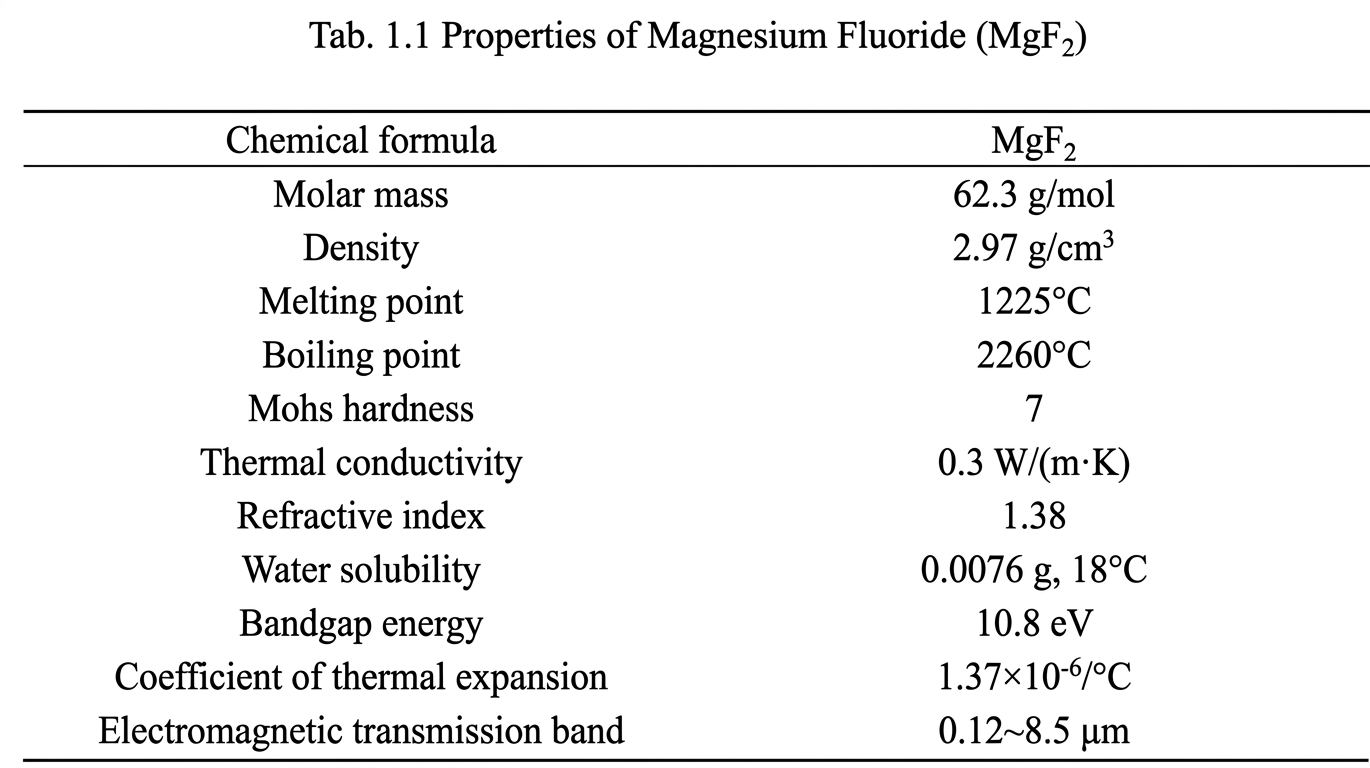
MgF₂ exhibits a combination of optical, mechanical, and chemical properties that make it suitable for demanding optical environments:
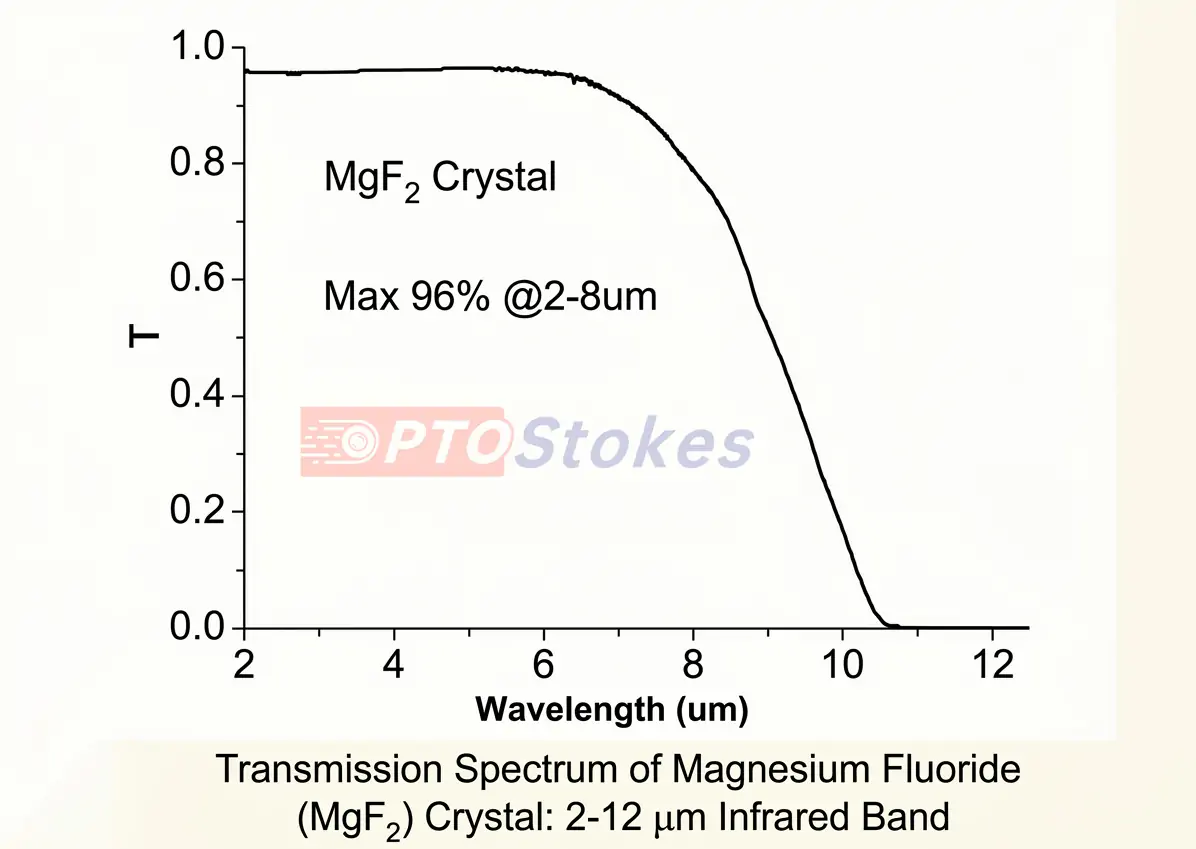
Optical transmission: Broad transparent range from approximately 0.12 µm (deep UV) to 10 µm (mid-wave IR), with high transmittance across UV, visible, and MWIR bands.
Refractive index: Approximately 1.38 at visible wavelengths — a low value that makes MgF₂ a critical material for high-efficiency anti-reflection coating designs.
Chemical stability: Low hygroscopicity and good resistance to most ambient conditions, supporting long-term use in outdoor and industrial settings.
Mechanical properties: Good hardness and mechanical strength, supporting precision polishing, coating deposition, and assembly processes.
Optical Forms of Magnesium Fluoride
MgF₂ is deployed in two primary optical forms: bulk solid optics and thin-film coatings. Each form serves distinct functions in an optical system.
Bulk MgF₂ Optics: Windows and Substrates
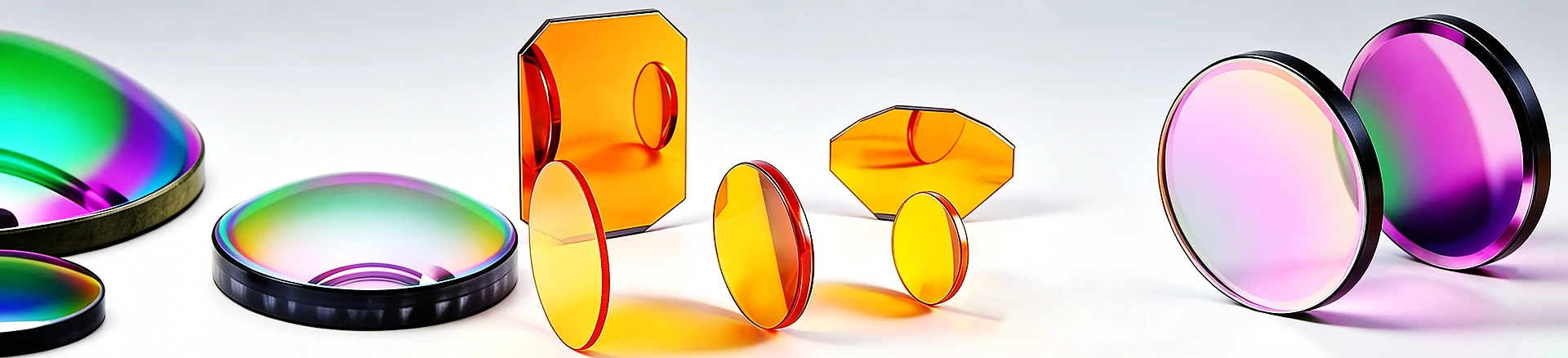
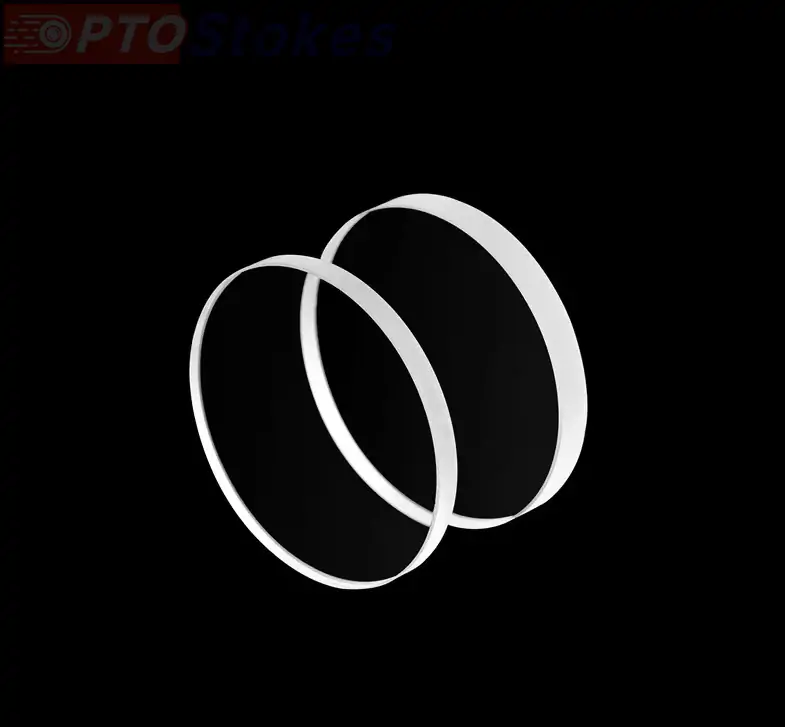
Bulk crystalline MgF₂ is fabricated into planar windows, substrates, and blanks for use as protective apertures or optical base layers. These components are commonly deployed in systems requiring broadband transmission from UV through MWIR.
MgF₂ windows and blanks can be polished to high surface quality and matched to various coating specifications. They represent a practical option for IR windows and IR blanks and substrates in multispectral optical designs.
MgF₂ Thin Film Coatings
Due to its low refractive index and good film adhesion, MgF₂ is a standard material for evaporated thin-film coatings. It is widely used as the outermost layer in multi-layer AR stacks, where it reduces Fresnel reflection and improves overall system transmittance.
MgF₂ coatings also offer high laser damage threshold and good thermal stability, making them suitable for laser optics and high-power optical systems.
| Parameter | Bulk MgF₂ Windows / Substrates | MgF₂ Thin Film Coatings |
|---|---|---|
| Primary function | Optical aperture, environmental protection, substrate base | Reflection control, transmittance enhancement, surface protection |
| Typical thickness | 0.5 mm to several millimeters | Nanometer scale (e.g., ~100 nm for single-layer AR) |
| Key advantage | Broadband transmission from UV to MWIR | Low refractive index for high-efficiency AR designs |
| Common applications | Spectroscopy, thermal imaging, UV instrumentation | Camera lenses, laser optics, multi-spectral windows |
Typical Optical Applications
MgF₂ optics are used across precision optical fields where broadband performance and environmental stability are required:
UV and deep-UV optics: Excellent ultraviolet transmission makes MgF₂ suitable for UV spectroscopy, lithography, and solar instrumentation.
Infrared imaging and sensing: MWIR transmission supports use in multispectral thermal imaging systems and IR sensor windows.
Laser systems: High laser damage threshold and stable refractive index support use in CO₂ lasers and other industrial laser optics.
Spectroscopic instruments: Broadband transmission and low autofluorescence make MgF₂ ideal for FTIR and UV-Vis-NIR spectrometers.
Outside of core optical fields, MgF₂ also finds limited use as a protective layer in specialty industrial components due to its chemical inertness.
Design Considerations
When specifying MgF₂ optics, consider the following engineering factors:
Operating wavelength range: Verify transmission performance at your specific UV, visible, or IR band of interest.
Coating requirements: Define AR, HR, or other coating specifications, as MgF₂ is frequently combined with other materials in multi-layer coating stacks.
Environmental conditions: While MgF₂ is relatively stable, confirm compatibility with extreme temperature, humidity, or chemical exposure in your application.
Mechanical tolerances: Specify surface quality, flatness, and dimensional tolerances based on system performance requirements.
Request Engineering Support
If you are evaluating MgF₂ windows, substrates, or coating-integrated optics for your design, submit your drawing, wavelength range, dimensions, coating requirements, operating conditions, and quantity to our engineering team. We will review your requirements and provide a tailored quotation with technical feedback.
Contact us at sales@iroptical.com to start your project review.