


ZnSe Equilateral Prisms
ZnSe equilateral prisms for IR wavelength separation, beam deviation, and spectroscopy layouts. Confirm aperture, angle tolerance, coating, and RFQ details.
Product Overview
Overview
ZnSe equilateral prisms are optical elements with three equal sides and 60 degree internal angles. They are used where infrared wavelength separation, beam deviation, or spectroscopic light routing has to be built into a compact optical layout.
For many teams, the real question is not whether an equilateral prism can be made from ZnSe. The engineering question is whether prism geometry, surface quality, coating route, and mounting condition match the intended wavelength band and system layout. For broader substrate context, see our ZnSe material page.
Why This Geometry Matters
Equilateral prisms are often selected for dispersive or beam-control functions because the geometry is predictable and can be integrated into optical benches, spectroscopy subsystems, and infrared instrument assemblies. Minimum deviation use conditions should be reviewed together with the refractive index and actual working wavelength.
Quick Specifications
| Parameter | Specification |
|---|---|
| Material | ZnSe |
| Clear aperture | 90% |
| Dimension tolerance | +0.0/-0.2 mm or +/-0.15 mm |
| Surface quality | 60/40, 40/20, 20/10, 10/5 options stated in source |
| Angle tolerance | 60 degree +/- 3 arcmin |
| Coating | Custom coating available |
Optical Use and Minimum Deviation
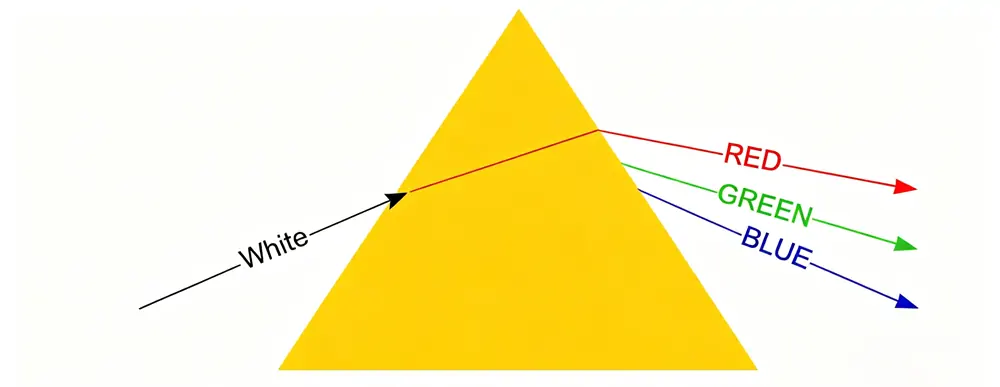
The source material highlights equilateral dispersing prisms for wavelength separation. A light ray is refracted twice through the prism, and the total deviation depends on refractive index and therefore wavelength. Reflection losses are reduced when unpolarized rays travel in the intended orientation relative to the prism base.
Typical Applications
- Infrared wavelength separation
- Spectroscopy layouts
- FTIR-related optical subsystems
- Laser beam deviation
- Optical instrument assemblies
Engineering Notes / Selection Guidance
The source includes several specification tiers for surface quality and flatness, but the final selection should be based on the real wavelength range, beam size, acceptable scatter, and mounting method. If your project needs a different prism geometry, you can also review the ZnSe prism category.
When sending an inquiry, include clear aperture, operating wavelength, whether minimum deviation use is required, coating target, and any orientation marking requirements. Use the contact page for drawing review and quotation support.