
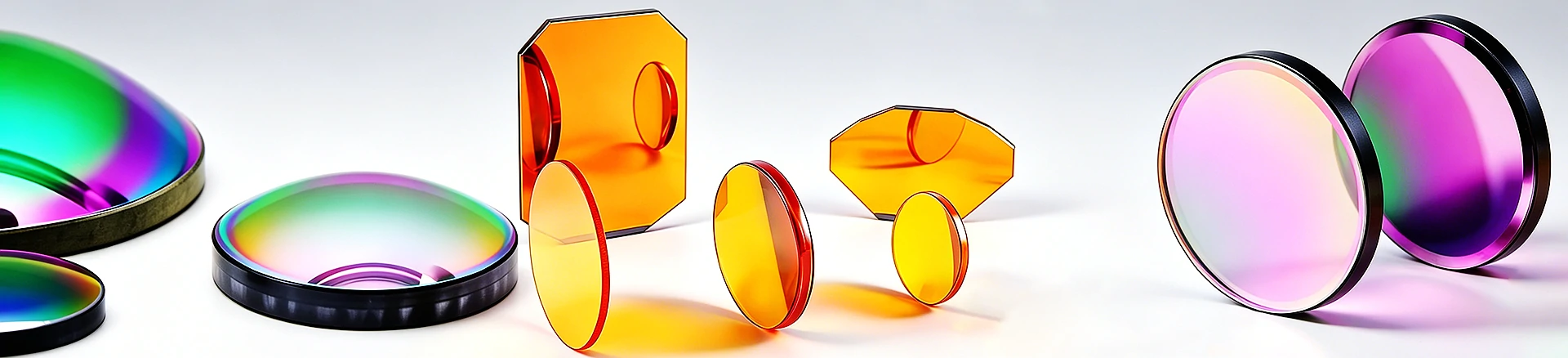
F/1.0 extremely short focal length, minimum spot, maximum power density
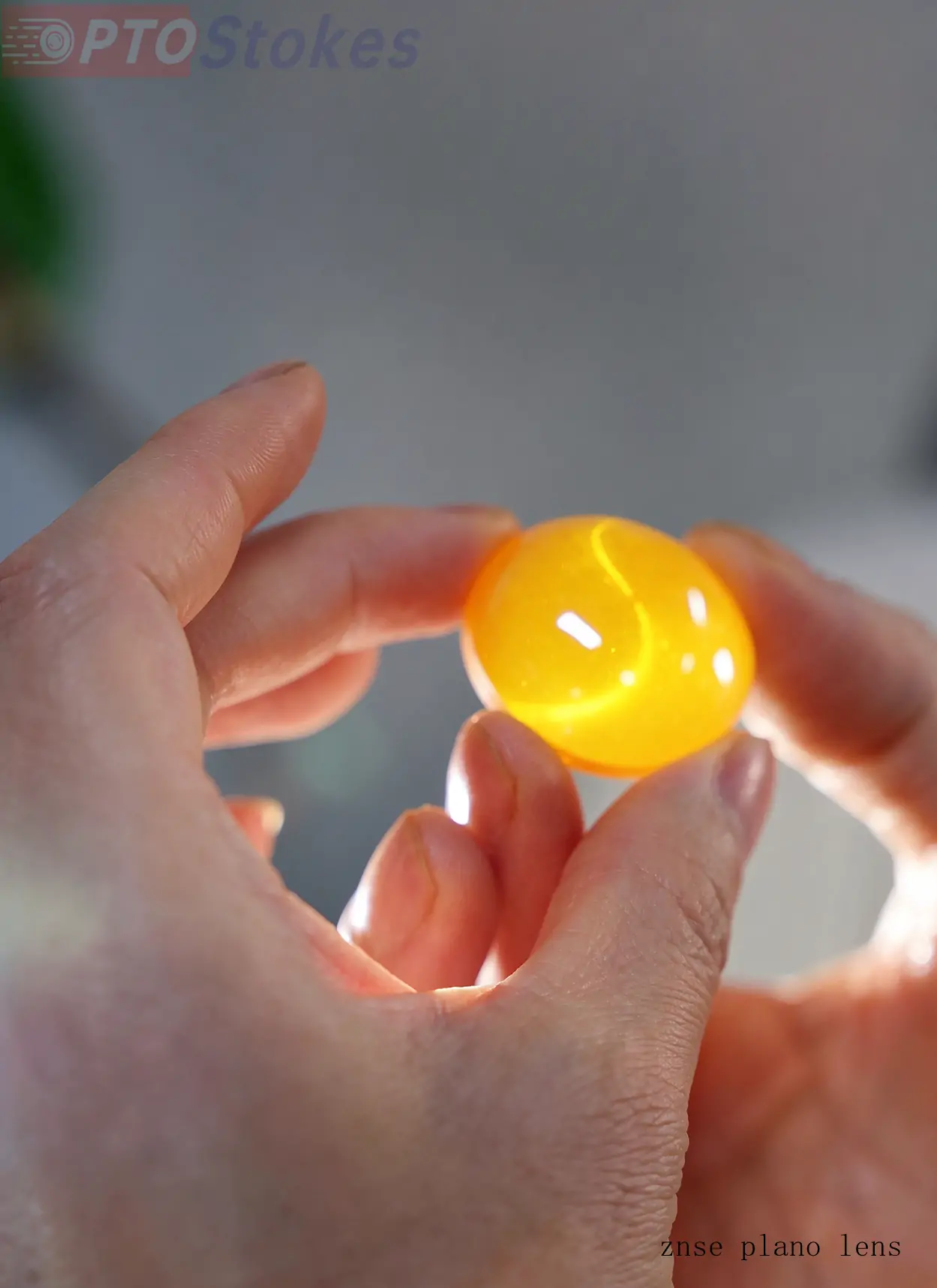
ZnSe flat convex focusing lens Dia25.4 mm EFL 25.5 mm: F/1.0 short focal length, used for CO ₂ cutting/drilling
ZnSe flat convex focusing lens, diameter 25.4 mm, EFL 25.5 mm ( F/1.0), with the highest minimum power density of the spot, suitable for thin plate precision cutting and drilling. The complete set of data is self consistent, and the surface
Product Overview
This is a very short focal length CO ₂ focusing lens: CVD zinc selenide (ZnSe) flat convex structure, with a diameter of 25.4 mm and an effective focal length of 25.5 mm, approximately F/1.0- the strongest aperture in the series. The input material is not written, and the refractive index of 2.404 (35.8/25.5=1.4039) is deduced from R/f, which matches the refractive index of ZnSe at 10.6 μ m. The substrate judgment is based on this; The three sets of data for height, focal length, and thickness are mutually consistent. F/1.0 means the smallest spot and highest power density in the entire series, as well as the shallowest depth of focus - it is suitable for precision cutting and drilling of flat thin materials, not for uneven workpieces. Similar lenses can be found in<a href=“ https://www.iroptical.com/IRLenses/ Infrared lens series
Technical specifications
| Project | Parameters | Description |
|---|---|---|
| Material | ZnSe (n ≈ 2.404 deduced from R/f) | Pending final confirmation of order |
| Effective focal length (EFL) | 25.5 mm | Self consistent with R (f × (n-1)) |
| Curvature radius (R) | 35.8 mm | Convex surface |
| Diameter | 25.4 mm | 1-inch standard caliber |
| Center thickness/edge thickness | 4.3 mm/2.0 mm | Sagittal height 2.3 mm, consistent with R and caliber |
| Back focal length (BFL) | ≈ 23.0 mm | f-t (n-1)/n, calculated value |
| F-number | ≈ F/1.00 | EFL/diameter, calculated value |
| Coating | Confirm according to order | This application usually requires AR@10.6 μm |
| Surface shape/surface quality/chamfer | Confirmed according to order | Not given, drawing review |
F/1.0 Extreme Aperture: What was gained and what was abandoned
Selection example: Fine cutting and punching on thin metal plates or plastic coated films, compact optical path space, requiring the narrowest cutting seam. F/1.0 compresses the light spot to the smallest size in the entire series and has the highest power density - at the same power, its cutting efficiency and drilling depth are the best among several focal lengths; The depth of focus is estimated to be only about 21 μ m based on 2 λ F ² (the estimated value is slightly affected by spherical aberration). The cost comes with it: if the height of the workpiece fluctuates by 0.1 mm, it will obviously lose focus, the material must be flat, and the Z-axis must have follow-up or precise focusing; Thick plates, rough forgings, and coils with waviness should not use this one. Compared with telephoto lenses (such as EFL 401 mm): telephoto lenses use power density to replace depth tolerance, while F/1.0 uses tolerance to replace power density - the middle 30.7 mm and 64.4 mm each occupy a segment. Before selecting a mirror, think carefully about which end of the spectrum your workpiece's flatness and cutting depth requirements fall on. Verification suggestions should be included in the protocol - EFL measurement at the design wavelength, 10.6 μ m transmission curve after coating, spot and slit sampling on actual workpieces.
Two places that are prone to misjudgment
The first one is thinking that short focal length is "finer" and can be used casually. The precision of F/1.0 only holds near the focal plane - the depth of focus is only a few tens of micrometers, which is smaller than the flatness of most metal plates. The board has waves and gaps in the follow-up system, and the cut is not fine seams but intermittent marks of varying depths. The premise of short focus fine cutting is that the workpiece is flat or the Z-axis tracking accuracy is sufficient. If one of the two is missing, a longer focal length is actually a better solution.
The second is to use the near axis focus as the optimal working point. The spherical aberration of the flat convex lens under F/1.0 is already very large, and the position of the minimum diffuse spot deviates from the near axis focus - the installation focusing should be based on the measured minimum spot positioning, rather than the position calculated by the focal length formula. There is also expectation: the spot size of this mirror is dominated by spherical aberration, which is larger than the diffraction limit; If the application requires a small light spot that approaches the diffraction limit, and the flat convex structure has reached the end of F/1.0, the crescent shaped or non spherical structure should be evaluated instead of continuing to switch to a shorter focal length flat convex structure.
Customization and Service
Diameter, focal length, center thickness, chamfer and installation surface shall be processed according to the drawings; The membrane system is designed according to the working wavelength (10.6 μ m single point or broadband), and the focusing mirror is recommended to have double-sided anti reflection. The ratio of center thickness to edge thickness of strong aperture lenses such as F/1.0 is large, and the control of processing stress and surface shape is the focus of the process. Surface shape records are attached with the goods. Horizontal comparison of materials can be found in<a ref=“ https://www.iroptical.com/materials/ Infrared Material Page
Information required for inquiry
The working wavelength and power, material type and flatness, target cutting seam or aperture, focal length and working distance, coating indicators and quantity, attached drawings are the fastest. Sent to sales@iroptical.com , Or through<a ref=“ https://www.iroptical.com/contact/ Inquiry pageSubmit. The specific values for coating, surface shape, and surface quality are not listed on this page and need to be reviewed and confirmed according to the drawings; If the flatness of your workpiece is limited, please also explain, and we will re recommend the focal length based on the acceptable depth of focus.