
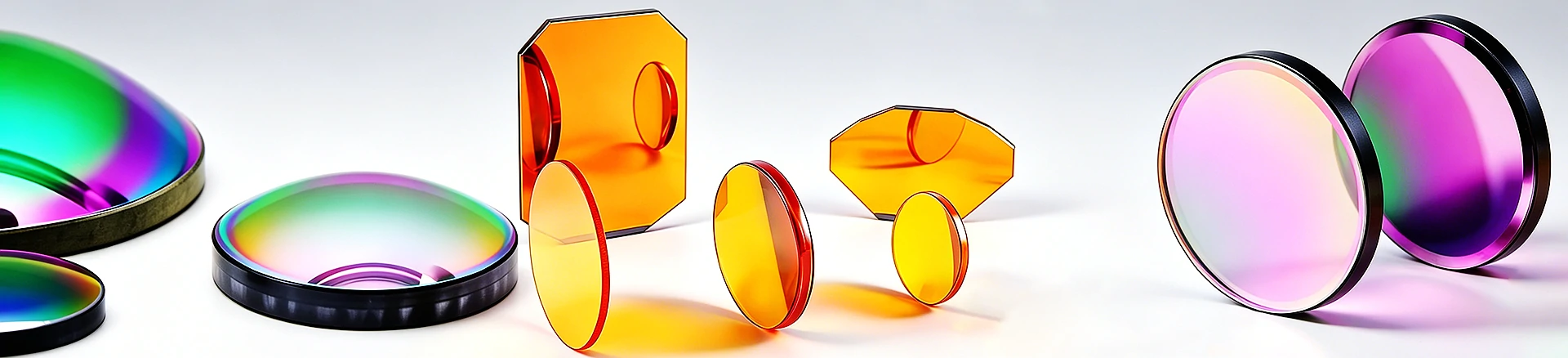
8-12 μ m transmittance>90%, Chalcogenide glass
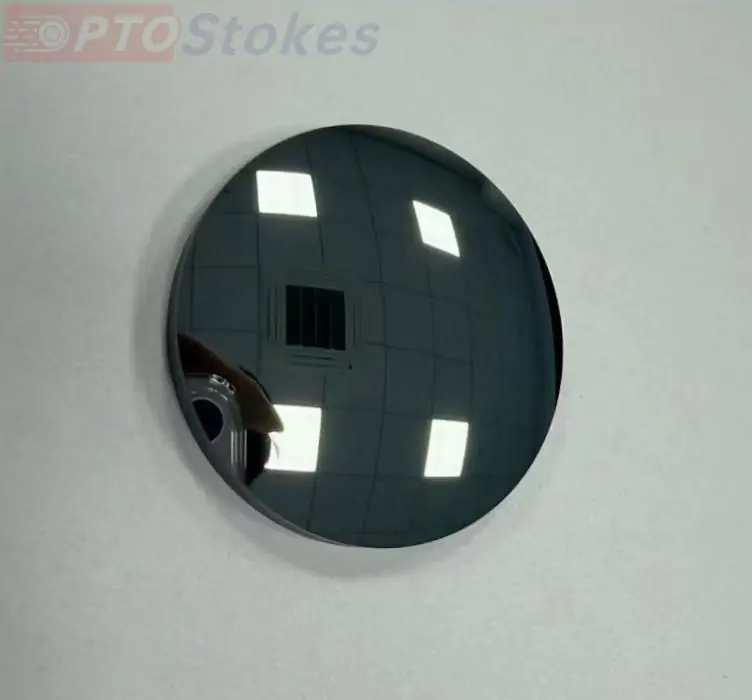
IRG206 Chalcogenide glass infrared lens 75 × 5 mm: 8-12 μ m coated with DLC+BBAR
IRG206 Chalcogenide glass infrared/blank 75 5 mm, 8-12 μ m transmittance>90%, DLC+BBAR coating, suitable for thermal imaging lenses
Product Overview
This is a Chalcogenide glass infrared (IRG206) component used for 8-12 μ m thermal imaging lenses, with a diameter of 75 mm and a center thickness of 5 mm. It has been coated with DLC hard film and BBAR anti reflection. Choose IRG206 instead of germanium, with two core points: a refractive index of about 2.6, which is not much lower than germanium but can be molded and is cheaper; The glass transition temperature is about 206 ℃ (the brand name is derived from this), which is low enough to accurately mold non spherical surfaces, bypassing the single point diamond turning required for germanium parts, and suitable for mass production of lightweight lenses.
Technical specifications
| Project | Parameters | Description |
|---|---|---|
| Material/grade | Chalcogenide glass infrared IRG206 | Ge Sb Se system, arsenic free |
| Dimensions | Diameter 75 mm, center thickness 5 mm | Curvature/focal length according to drawing |
| Transmittance | 8-12 μ m average T>; 90% | Finished product indicators after coating |
| Coating | DLC hard film+BBAR broadband anti reflection | DLC tube is wear-resistant, BBAR tube passes through |
| Refractive index (10 μ m) | ≈ 2.6 | Typical values of materials |
| dn/dT | ≈ 70 × 10 ⁻⁶/K | Material typical value, significant temperature drift |
| Surface shape/quality | Confirmed according to order | Not given, drawing review |
Why do thermal imaging lenses like to use Chalcogenide glass infrared: selection deduction
A handheld thermal imager should cover 8-12 μ m and be as light and small as possible. High refractive index makes the curvature of the lens slower and the aperture smaller at the same focal length, reducing the overall weight and number of lenses; Low Tg enables non spherical surfaces to be molded, with a single piece cost one to two orders of magnitude lower than that of germanium non spherical surfaces turned by diamond. This is the fundamental reason for its entry into industrial and consumer thermal imaging. The trade-off is also very practical: the dn/dT of IRG206 is about 70 × 10 ⁻⁶/K, which is several times that of germanium. When the temperature changes, the focal length will drift, and the lens must be designed with no heat or locked in the working temperature zone; The material has low hardness and can be easily scratched on the bare surface, so DLC is not an optional option but a mandatory one; Processing debris containing sulfur-containing elements such as selenium must be collected according to hazardous waste regulations (general reminder, specific subject to local regulations). Applicable boundary: If the system also needs to consider 3-5 μ m medium wave, it is necessary to first verify the transmission and design margin of IRG206 in this band; If the working temperature span is large, the non thermalization scheme must be verified. IRG206 is an arsenic free formula that is more environmentally friendly and processing qualified, but the edges still require DLC edge sealing to prevent local deliquescence - this is the most easily overlooked failure point of sulfur based glass. Write verification suggestions into the protocol - actual transmission curve, surface PV value, DLC adhesion and wear resistance test report for 8-12 μ m after coating.
Two places that are prone to misjudgment
The first one is to treat the blank as a finished product. 75 × 5 mm is only the diameter and thickness, without providing curvature, focal length, or F-number. It may be a blank or a flat part, and drawings must be provided before placing an order, otherwise the quotation cannot be discussed. The second is to confuse the division of labor between DLC and BBAR: DLC tubes are wear-resistant and environmentally resistant, but do not solve the problem of penetration; The refractive index of sulfur based glass is about 2.6, and the single-sided Fresnel reflection is about 19%. Without BBAR coating, the overall transmittance is less than 90%. The correct approach is to stack the two and check the wear resistance and penetration curves separately during acceptance, rather than just looking at one curve.
Customization and Service
We can undertake material selection, circular/irregular blanks, spherical and non spherical molding, DLC and BBAR coating, drawing customization, and sample review. The non spherical molding of sulfur based glass is our process focus, suitable for infrared lens projects that require cost reduction and quantity increase. For similar items, please refer to<a ref=“ https://www.iroptical.com/chalcogenide-glass-optics/ Sulfur based glass optical components, see material comparison https://www.iroptical.com/materials/ Infrared Material Page
Information required for inquiry
The working band, diameter and thickness, curvature or focal length/F-number, surface shape and surface quality requirements, coating indicators and quantities, with drawings attached as soon as possible. Sent to sales@iroptical.com , Or through<a ref=“ https://www.iroptical.com/contact/ Inquiry pageSubmit. The specific values for surface shape, surface quality, focal length, and curvature are not listed on this page and need to be reviewed and confirmed according to the drawings.