
Optimizing Performance: Why Proper Handling of ZnSe Focus Lenses in CO2 Laser Cutting Is Critical
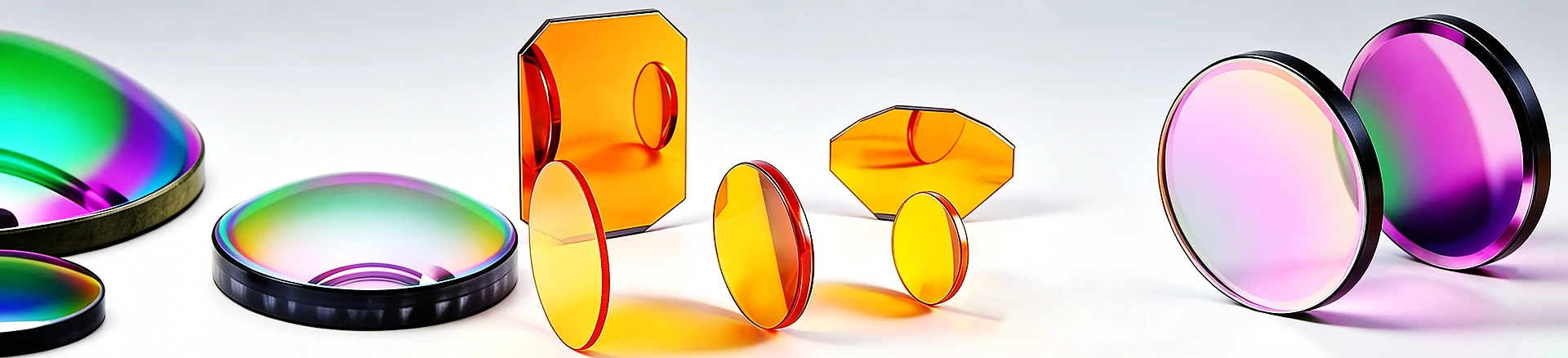
In high-power industrial laser systems, specifically CO₂ laser cutting machines, Zinc Selenide (ZnSe) is the industry-standard substrate for focusing and beam delivery optics. Synthesized via Chemical Vapor Deposition, CVD Zinc Selenide offers an exceptionally wide infrared (IR) transmission spectrum (0.6 µm to 22 µm) and an ultra-low bulk absorption coefficient. However, despite its outstanding optical efficiency, ZnSe possesses specific mechanical and chemical vulnerabilities. Proper handling and environmental controls are mandatory to prevent catastrophic optical failure and extend the component lifespan.
The Vulnerability of CVD Zinc Selenide Substrates and AR Coatings
CVD ZnSe is a relatively soft material with a Knoop hardness of only 120. This makes it highly susceptible to mechanical scratches, micro-fractures, and edge chipping if subject to excessive force or impact during assembly. Furthermore, because uncoated Zinc Selenide exhibits a high refractive index (approximately 2.402 at 10.6 µm), it suffers from a substantial 29.1% surface reflection loss. To maximize transmission to over 99.5%, high-efficiency Anti-Reflective (AR) coatings are vacuum-deposited onto the lens surface.
These optical thin films are highly sensitive to organic contaminants, moisture, and particulate matter. Direct skin contact introduces skin oils, sweat, and mild acids, which permanently chemically etch the AR coating. When the laser beam passes through a contaminated area, the localized absorption coefficient escalates exponentially. This localized overheating leads to thermal lensing—distorting the focal spot—and can ultimately cause thermal shock failure, shattering the ZnSe focus lens mid-operation.
Standard Protocol for Handling and Environmental Protection
To preserve the structural integrity and optical wavefront performance of your beam control optics, your facility must enforce strict handling SOPs. The operating environment must deliver a continuous stream of clean, completely dry, and oil-free compressed air or nitrogen to purge the cutting head and isolate the optics from debris.
| Optics Risk Factor | Material/Physical Cause | Correct Preventive Action & Engineering Control |
|---|---|---|
| Mechanical Chipping & Cracking | Low Knoop Hardness (120), brittle crystal structure. | Do not apply excessive force. Hold exclusively by the non-optical frosted ground edges or mounting bezels. |
| AR Coating Degradation | Skin oils and organic acids chemically etch optical thin films. | Never touch the optical surface bare-handed. Wear powder-free nitrile gloves or dedicated finger cots. |
| Particulate/Thermal Absorption | Atmospheric moisture and airborne hydrocarbons oil up the lens. | Deploy multi-stage industrial air dryers and oil-coalescing filters for the auxiliary assist gas. |
| Handling Small-Form Components | High risk of drop damage or surface scratching via manual tools. | Utilize specialized optical vacuum tweezers or carbon-tipped tweezers for micro-positioning. |
Minimizing Equipment Downtime with Premium IR Optics
When an optical element fails, the resulting production downtime can jeopardize project timelines and escalate overhead. Engineering teams and procurement managers require a reliable supply chain that guarantees consistent laser damage thresholds and predictable lead times. Incorporating world-class IR windows and lenses optimized for high-power laser configurations ensures your systems run at peak thermal efficiency.
At iroptical, we understand the stringent technical demands of optical system integration. We maintain an extensive in-stock selection of standard ZnSe plano-convex lenses, prisms, and custom-engineered beam control optics to support immediate system deployment and emergency replacements. For proprietary systems with complex structural or spectral specifications, our production lines fully support advanced high-level customization with guaranteed strict tolerance controls.
Contact iroptical for Technical Consultation and RFQ
Are you experiencing premature lens degradation, thermal shifting, or looking to stabilize your optical components supply chain? Our experienced application engineering team is ready to review your system requirements, provide coating performance curves, and deliver competitive pricing for both OEM prototyping and high-volume production batches. Contact us today via email at sales@iroptical.com to request a quote or schedule a technical consultation.