
High-Transmittance Calcium Fluoride (CaF2) Optics: Broad-Spectrum Performance & Industrial Applications
Calcium Fluoride (CaF2) is an exceptional cubic crystalline optical material renowned for its ultra-broad transmission range spanning 200 nm in the deep ultraviolet (DUV) to 8000 nm in the mid-infrared (Mid-IR). Characterized by high transmittance exceeding 90%, exceptionally low intrinsic absorption, and a superior Laser-Induced Damage Threshold (LIDT), CaF2 serves as an indispensable substrate across spectroscopic analysis, high-power laser systems, and infrared thermal imaging applications.
Core Material Properties and Optical Advantages of CaF2
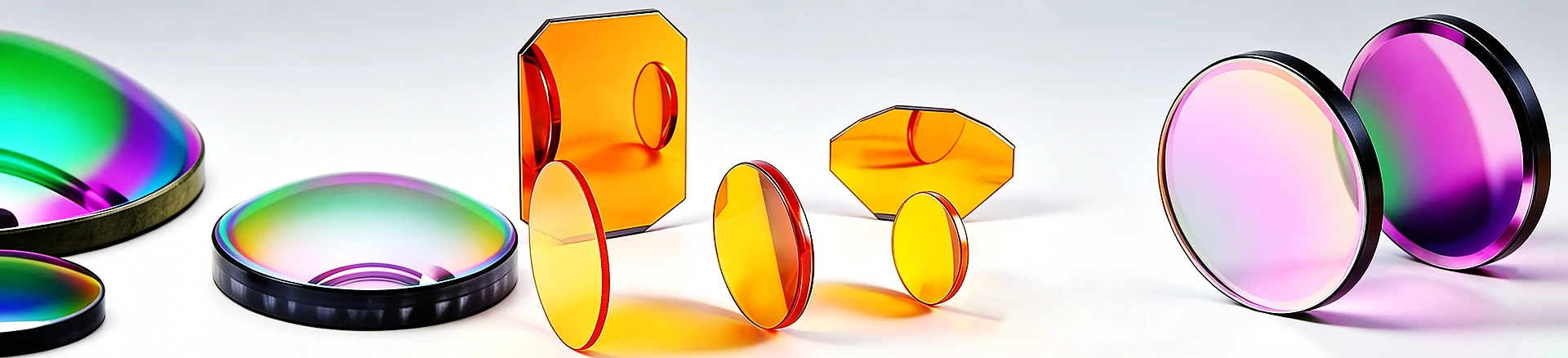
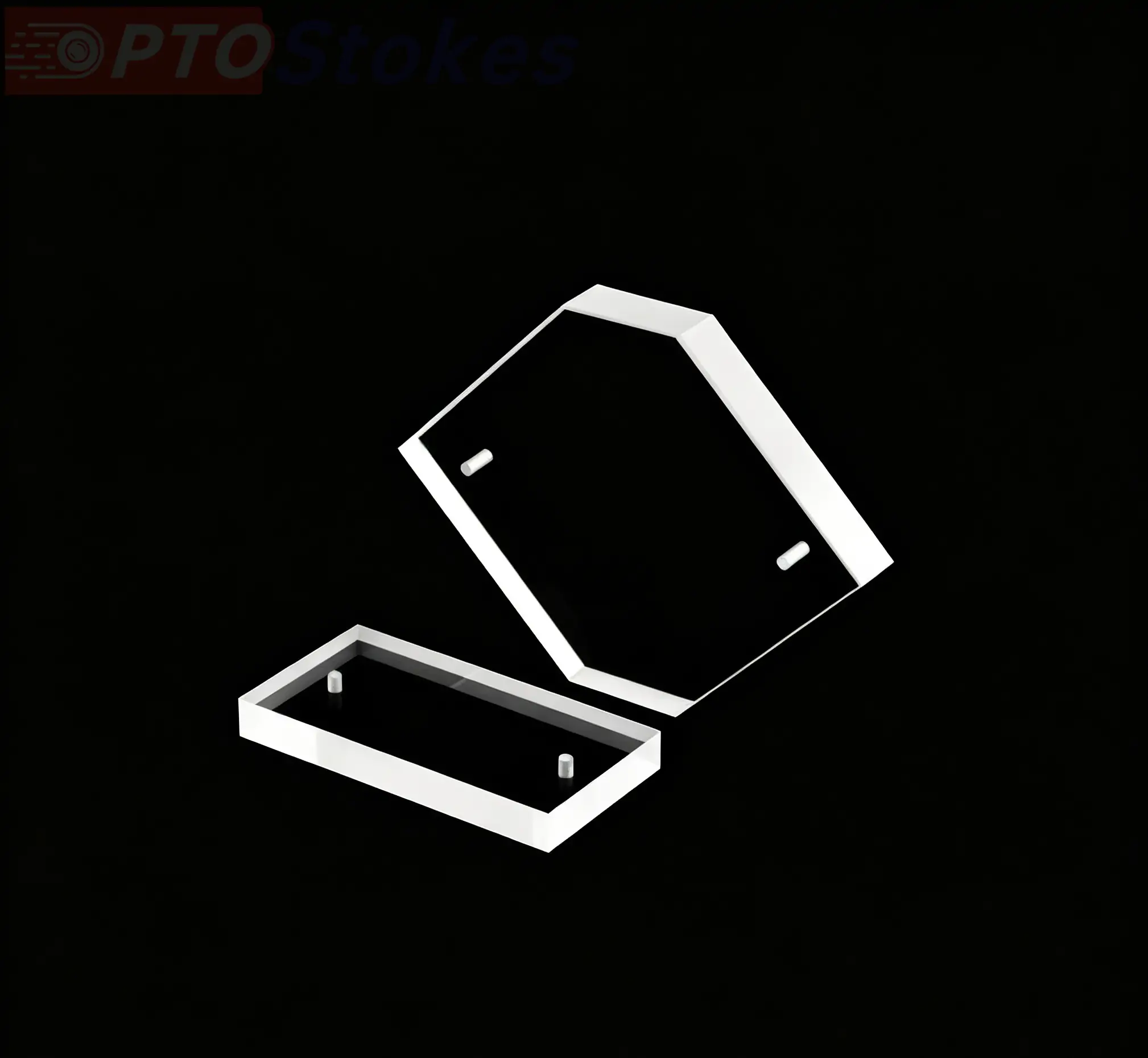
Belonging to the cubic crystal system, CaF2 is an isotropic ionic crystal naturally free from stress-induced birefringence. Its structural uniformity enables precision fabrication into custom optical components, including spherical lenses, right-angle prisms, flat optical windows, and beamsplitters.
| Performance Metric | Technical Specification & Value | Engineering Advantage |
|---|---|---|
| Spectral Transmission Range | 200 nm – 8000 nm (DUV to Mid-IR) | Maintains >90% average transmittance without characteristic absorption peaks. |
| Refractive Index Uniformity | Up to 10-6 order (Optical Grade) | Eliminates wave-front distortion in high-precision imaging and focus systems. |
| Absorption Coefficient | Extremely Low (Infrared Lattice Vibration Absorption Peak > 8 µm) | Minimizes thermal lensing and energy dissipation under heavy optical loads. |
| Laser Damage Threshold | High (Pulsed UV & CW Mid-IR compatible) | Withstands high-energy irradiation without surface degradation or degradation. |
| Chemical Stability | Low Hygroscopicity at room temperature | Ensures long-term operational reliability in standard industrial and outdoor setups. |
1. Ultra-Broadband High Transmittance
Because the fundamental lattice vibration absorption of CaF2 lies beyond 8 µm in the far-infrared region, the material exhibits virtually zero intrinsic absorption across the 200 nm to 8000 nm band. Unlike standard silicate optical glasses limited to the visible and NIR spectrums, CaF2 seamlessly bridges the DUV and Mid-IR spectrums. This eliminates insertion loss, reduces stray light scatter, and optimizes signal-to-noise ratios in multi-spectral and low-light detection systems.
2. Low Absorption Coefficient & High Laser-Induced Damage Threshold (LIDT)
The stable crystal lattice structure of CaF2 yields high resistance to optical radiation damage. Under pulsed excimer UV lasers or continuous-wave Mid-IR radiation, CaF2 maintains dimensional stability without experiencing severe thermal expansion or thermal lensing effects. This low-absorption profile guarantees consistent beam quality and prolongs the operational lifespan of high-energy photonics assemblies.
Industrial Applications of Precision CaF2 Optical Components
Leveraging its combined strengths of broadband transparency, mechanical resistance, and optical homogeneity, iroptical supplies CaF2 optical components tailored for high-demand optical architectures across major industries.
1. Broadband Spectroscopic Instrumentation
In UV-Vis-NIR spectrophotometers, Fourier Transform Infrared (FTIR) spectrometers, and monochromators, CaF2 is the material of choice for beam splitters, dispersion prisms, and sample cell windows. A single CaF2 optical element spans 200 nm to 8000 nm, bypassing the need for multi-substrate optic swapping. This streamlines system design while ensuring spectral measurement continuity in gas sensing, pharmaceutical analysis, and environmental monitoring.
2. High-Power Laser Systems
CaF2 acts as a critical transmissive component in high-power UV and Mid-IR laser setups:
• Ultraviolet Lasers: Utilized for output windows and focusing optics in excimer lasers and 266 nm/355 nm solid-state lasers. High LIDT values withstand repeated high-energy pulse irradiation.
• Mid-Infrared Lasers: Employed in medical laser surgical devices and industrial material processing setups, facilitating stable energy delivery and sharp focal point control.
3. Infrared Thermal Imaging & Radiometry
Protective windows and imaging lenses constructed from CaF2 are widely deployed in thermographic cameras and infrared pyrometers. Operating seamlessly across the primary thermal radiation bands up to 8000 nm, CaF2 features extremely low infrared emissivity. It preserves high signal throughput without distorting target temperature readings in high-temperature furnace monitoring, power grid inspection, and security surveillance systems.
4. Deep Ultraviolet Photolithography & Space Optics
At ~193 nm and ~248 nm DUV wavelengths where standard optical glasses suffer intense absorption, precision CaF2 optics maintain over 90% transmission. CaF2 is vital for projection lenses and illumination systems in semiconductor DUV photolithography equipment. Furthermore, its excellent vacuum stability and radiation resistance make it highly suitable for multi-band orbital space payloads and specialized plasma physics research.
Engineering Considerations, Customization, and Supply Assurance
Selecting the optimal CaF2 optic requires balancing surface quality (Scratch-Dig 20/10 or 10/5), transmitted wavefront error (λ/10 or better), and specialized anti-reflective (AR) coatings to optimize performance at target wavelengths. Whether your design requires standard off-the-shelf inventory for rapid prototyping or complex OEM custom shapes with strict environmental durability requirements, controlled fabrication processes are critical to preventing cleavage along the [111] crystal planes.
Addressing Engineering & Procurement Challenges:
• Predictable Lead Times: Maintaining a robust, in-stock supply of raw CaF2 ingots and standardized blank sizes mitigates supply chain risks.
• Custom Fabrication: State-of-the-art CNC grinding, polishing, and thin-film AR coating capabilities deliver tailored diameters, focal lengths, and mounting configurations.
• Quality Verification: Every lot undergoes full spectral transmission verification, surface interferometry, and strict LIDT testing to meet international photonics standards.
Optimize Your Optical System with High-Precision CaF2 Components
Looking to eliminate spectral bottlenecks or upgrade the laser damage threshold of your optical system? The engineering team at iroptical provides complete technical support—from custom material selection and coating design to volume production with guaranteed lead times.
Contact our technical support specialists today at sales@iroptical.com or submit your specifications directly through our online RFQ portal to request a detailed technical review, custom quotation, or test samples.