
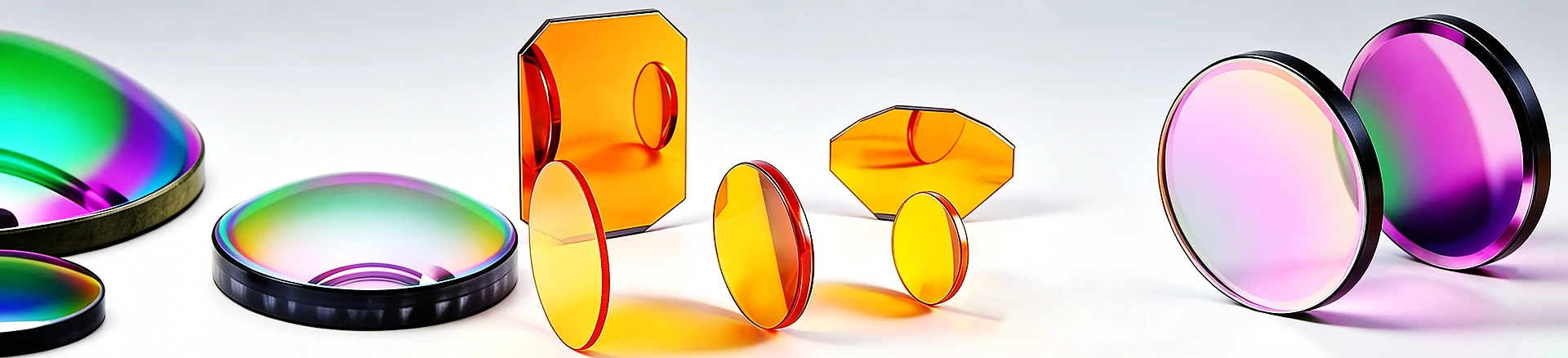
Beyond Substrate Selection: How AR, HR, and DLC Coatings Determine Real-World Optical Performance
In optical component selection, a common design oversight is prioritizing substrate material, clear aperture, and focal length while treating thin-film coatings as standard secondary specifications. However, operational field data reveals a critical reality: over 40% of optical system failures—such as inadequate laser output power, image darkening in thermal cameras, environmental film delamination, and sudden optic breakdown under high fluence—stem directly from misaligned coating selection rather than substrate flaws.
The operational performance of an optical element is defined by the synergy between the bulk properties of the substrate and the spectral and mechanical performance of the thin-film stack. For high-refractive-index infrared materials and multi-element cascaded optical assemblies, thin-film coatings exert a greater influence on system throughput and longevity than the substrate itself.
At iroptical, we engineer and supply a full spectrum of precision optical coatings—including Anti-Reflective (AR), High-Reflectance (HR), beam-splitting, polarizing, Diamond-Like Carbon (DLC), and high Laser-Induced Damage Threshold (LIDT) coatings—spanning the ultraviolet to long-wave infrared spectrum (200 nm to 14 µm). Below is an engineering evaluation of coating physics, parameter matching, and environmental selection criteria.
1. Anti-Reflective (AR) Coatings: Eliminating Fresnel Losses to Maximize Energy Throughput
When light passes through the interface between air and an uncoated optical substrate, abrupt changes in refractive index induce Fresnel reflection losses. For normal incidence, the single-surface Fresnel reflection coefficient \( R \) is expressed as:
R = [(n₂ - n₁) / (n₂ + n₁)]²
Where n₁ is the refractive index of air (≈ 1.0) and n₂ is the refractive index of the substrate. High-index infrared materials exhibit severe uncoated surface reflection losses:
N-BK7 Optical Glass (nd = 1.5168): Single-surface loss ≈ 4.2%; total double-surface transmission loss ≈ 8.1%.
Zinc Selenide (CVD ZnSe, nd = 2.403): Single-surface loss ≈ 17.0%; total double-surface transmission loss reaches 31.1%.
Monocrystalline Silicon (Si, nd = 3.422): Single-surface loss ≈ 30.0%; total double-surface transmission loss exceeds 50%.
Anti-reflective coatings mitigate these losses by depositing alternating dielectric layers of high and low refractive index materials, leveraging destructive quantum interference to eliminate reflected waves.
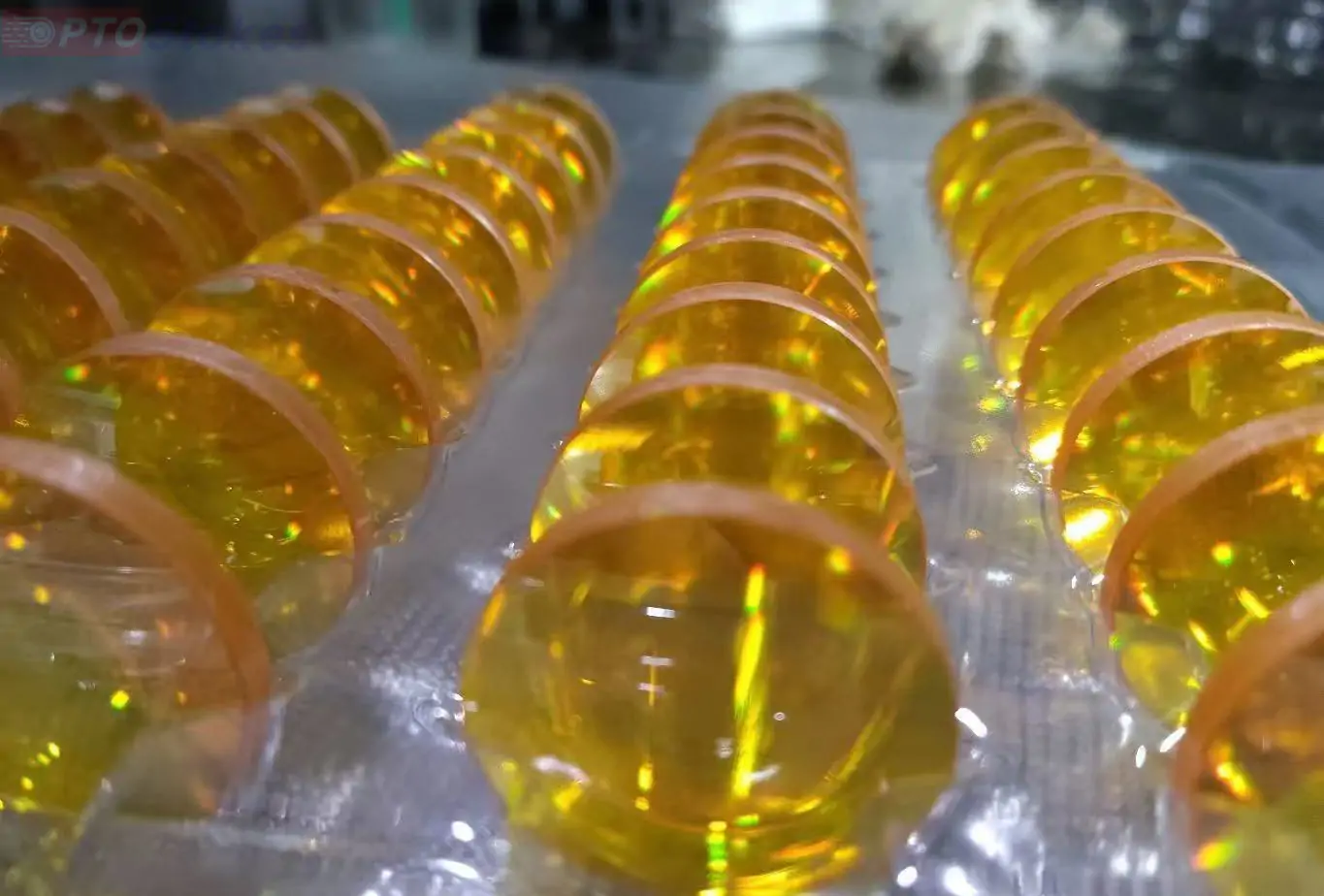
On high-performance ZnSe optics, dual-surface multi-layer broadband AR coatings drop single-surface residual reflection to 0.25%–0.5%, yielding total transmission above 99%. For instance, a 10.6 µm CO2 laser ZnSe focusing lens coated on both sides achieves >99.5% transmission, regaining nearly 30% lost beam power compared to its uncoated state.
In multi-lens optical trains, this effect scales exponentially. An 8-element imaging assembly without thin-film coatings loses approximately half its light throughput ((0.92)⁸ ≈ 51%). When fully integrated with optimized 7-12um AR Coating stacks, overall system transmission rises to ~92% ((0.99)⁸), effectively doubling signal transmission while suppressing internal ghost reflections and flare.
Wavelength & Substrate Coating Compatibility Matrix
| Spectral Range | Compatible Substrates | Primary Industrial & R&D Applications |
|---|---|---|
| Visible (0.4 – 0.7 µm) | N-BK7, Fused Silica, Sapphire | Machine vision, inspection systems, biomedical instrumentation |
| Near-Infrared / Laser (1.05 – 1.58 µm, 1064 nm) | Fused Silica, N-BK7 | Fiber laser cutting/welding, NIR sensing, LiDAR |
| Mid-Wave & Long-Wave IR (3–5 µm, 8–12 µm, 10.6 µm) | Silicon, Germanium, CVD ZnSe, ZnS | Thermal imaging, FLIR defense, CO2 laser processing |
| Ultraviolet / Deep UV (0.355 µm, DUV) | Synthetic Fused Silica, MgF2, CaF2 | UV laser micromachining, semiconductor lithography |
2. High-Reflectance (HR) & Beamsplitting Coatings: Precision Beam Control
Beyond throughput optimization, thin-film coatings facilitate directional reflection, spectral filtering, and beam combination essential for laser resonators and complex optical assemblies.
Dielectric High-Reflectance (HR) Coatings
Dielectric HR coatings utilize constructive interference across alternating quarter-wave film stacks, achieving far higher reflectance and lower thermal absorption than conventional metallic coatings (such as aluminum or gold). Single-wavelength dielectric HR coatings optimized for 10.6 µm deliver reflectivity ≥99.8% with single-pass absorption loss <0.2%, serving as the industry standard for cavity mirrors and beam-steering optics.
For systems requiring alignment aids, dual-band optical coatings (e.g., gold/dielectric hybrid stacks) reflect both the primary 10.6 µm working beam (R ≥ 99.5%) and a 650 nm red guide laser (R ≥ 80%), eliminating the need for complex external alignment optics.
Beamsplitting & Combining Thin Films
By precisely calibrating layer thickness and index ratios, beamsplitting coatings partition light into specific transmission-to-reflection ratios (e.g., 50:50, 70:30) or combine multi-spectral paths coaxially—such as combining a 10.6 µm CO2 processing beam with a 650 nm target diode laser.
3. Diamond-Like Carbon (DLC) Coatings: Extreme Durability for Harsh Environments
Standard dielectric films exhibit low mechanical hardness and limited environmental resistance, making them vulnerable to degradation in outdoor, highly humid, saline, or dust-laden industrial settings. Diamond-Like Carbon (DLC) coatings provide an ultra-hard, amorphous carbon shield engineered specifically for severe operational conditions.
DLC thin films combine the extreme hardness of diamond with the chemical inertness of graphite, delivering three vital engineering protections:
Mechanical Armor: Film hardness is over ten times greater than native CVD ZnSe substrates, resisting particle erosion, severe airborne dust impact, and repeated cleaning abrasions.
Environmental Protection: Chemically inert to salt spray, atmospheric moisture, acid rain, and corrosive gases. DLC seals hygroscopic and delicate IR substrates (e.g., ZnS, Germanium), extending outdoor optic operational life by 200%–300%.
IR Spectral Compatibility: Anti-reflection performance optimized within 3–5 µm or 8–14 µm spectral windows ensures maximum ruggedness without compromising thermal system sensitivity.
4. High Laser-Induced Damage Threshold (LIDT) Coatings for High-Power Optics
Standard AR coatings subjected to multi-kilowatt continuous wave (CW) or high-peak-power pulsed laser radiation frequently fail due to localized thermal absorption, dielectric breakdown, pinhole micro-cavitation, or film spallation. This places a direct ceiling on system laser power.
High LIDT coatings manufactured by iroptical utilize high-purity coating materials, Ion Beam Sputtering (IBS) deposition, and stress-balanced layer designs to minimize defect density and internal film stress:
Pulsed Laser Damage Threshold: Up to 15 J/cm² (1064 nm, 10 ns pulse width).
CW Laser Damage Threshold: Exceeds 10 kW/cm² power density.
Performance Advantage: Near-zero absorption, dense stoichiometry, and high thermal stability eliminate power thermal lensing shifts and prevent coating burn-through under sustained kilowatt-class operations.
5. Quality Assurance & Thin-Film Process Control
Even with identical thin-film designs, real-world performance varies drastically between manufacturers due to deposition precision and metrology standards.
Film thickness uniformity is the primary hidden variable in coating quality. Minor asymmetries in planetary fixture rotation, evaporation angles, or ion-source current uniformity cause radial or azimuthal film thickness gradients. A thickness deviation of just 2 nm between the center and edge of a 50 mm optic shifts the edge transmission curve by 2–3 nm, leading to non-uniform energy delivery.
At iroptical, quality assurance relies on full-aperture spectral metrology and advanced testing equipment—including ZYGO 3D optical interferometers, precision goniometers, and spectrophotometers. Every production run undergoes complete verification for surface figure, angular tolerances, spectral transmittance, and laser damage thresholds, providing full traceability from design validation to final delivery.
6. Application-Driven Coating Selection Matrix
| Operating Condition | Recommended Coating | Typical Substrates | Core Engineering Benefit |
|---|---|---|---|
| Indoor Visible / NIR Imaging | Standard Multi-Layer AR | N-BK7, Fused Silica | Transmission >99%, minimal ghosting |
| UV Laser Micromachining | UV-grade High-LIDT AR | Synthetic Fused Silica, CaF2 | Low intrinsic absorption, solarization resistant |
| High-Power CO2 Laser Processing | 10.6 µm High-LIDT AR Coating | CVD ZnSe, GaAs | High transmission, minimal thermal lensing |
| Outdoor Thermal Vision / Automotive IR | DLC Hard Protective Coating | Germanium, ZnS, Silicon | Extreme abrasion, weather & salt spray resistance |
| Laser Cavity / Folding Mirrors | Single/Dual-Band HR Coating | Silicon, Molybdenum | Reflectivity ≥99.8%, low cavity insertion loss |
| Laser Beam Combining Systems | Dichroic Beamsplitter Coating | CVD ZnSe, N-BK7 | Precise spectral separation/coaxial alignment |
Optimize Your Infrared System Performance with iroptical
Whether you require standard in-stock AR-coated ZnSe lenses or custom DLC-coated optics for extreme environments, iroptical delivers world-class manufacturing, predictable lead times, and rigorous quality guarantees. Our engineering team provides end-to-end technical support to ensure your optical coating selection aligns perfectly with your wavelength, power density, and environmental specifications.
Contact our engineering sales team today at sales@iroptical.com or submit a custom RFQ through our website to request technical consultations, test samples, or detailed pricing.